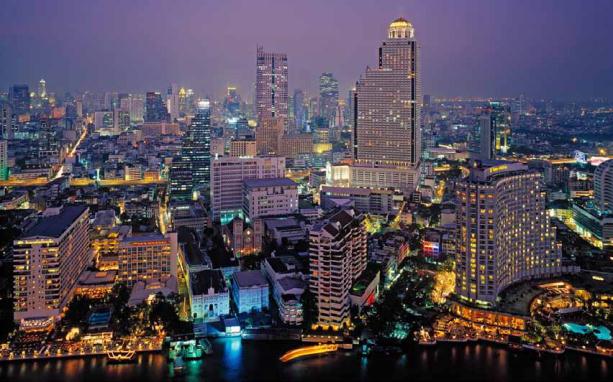
In una città nota per il trafco sofocante, la stazione-
padiglione reale può essere il punto di partenza per una
passeggiata bordeggiando l’area verde del Regio Parco
Dusit. Il tempio Benchamabophit, posto in un’area di pace e
quiete, progettato dal principe Naris e dall’architetto Ercole
Manfredi, assolve brillantemente al ruolo di esempio, riuscito,
dell’incontro tra Oriente e Occidente. Il marmo di Carrara
ricopre l’intero sviluppo esterno del tempio che, con vetrate
colorate, racchiude la statua dorata del Buddha.
L’arteria fondamentale del progetto urbanistico,
Ratchdamnoen Nok, unisce il Dusit al resto della città. Italiani
sono i ponti, tra cui il pregevole Panfa Lila, e il Palazzo Ananta
Samakhom: il monumento edifcato al destino glorioso di
Rama V. Simbolo dell’eclettismo internazionale, il maestoso
Palazzo del Trono dalle forme neobarocche ricorda non poco
la torinese basilica di Superga di Filippo Juvarra. La struttura è
afrescata dal forentino Galileo Chini. La riscoperta di un’altra
Bangkok porta ancora ai monumento alla democrazia e alla
vittoria che emergono dal trafco.
Un itinerario che concludiamo non lontano dall’Oriental
Hotel. Qui, tra il solito caos e i tipici mercatini, sbucano
improvvisamente le linee neoclassiche della biblioteca Neilson
Hays. Solo l’ultima memoria di un viaggio nel tempo tra i tesori
segreti lasciati a Bangkok quando l’Italia incontrò l’Oriente.
In a city noted for its suffocating traffic, the Royal Station-
Pavilion may be the point of departure for a stroll around
the green area of Regio Parco Dusit. The Benchamabophit
Temple, situated in an area of peace and quiet, designed by
Prince Naris and the architect Ercole Manfredi, is a brilliant
example of the meeting between the Orient and the West.
Carrara marble covers the entire outside of the temple
which, with coloured glass, encloses the gilded statue of
Buddha.
The principal artery of the urban project, Ratchdamnoen Nok,
units the Dusit to the rest of the city. The bridges - among which
the praiseworthy Panfa Lila - and the Ananta Samakhom edifce,
the majestic monument built to the glorious destiny of Rama V,
are all Italian. The majestic Throne Palace, with its neo-Baroque
forms clearly recalls the Turinese Superga Basilica of Fillipo
Juvarra and is a symbol of international eclecticism. The structure
was frescoed by the Florentine Galileo Chini. The rediscovery of
another Bangkok leads again back the Monument to Democracy
and Victory, which emerge from the trafc.
This is an itinerary which we conclude a short distance from the
Oriental Hotel. Here, amid the usual chaos and the typical little
markets, suddenly appear the neoclassical lines of theNielsonHays
library - only the last memory of a trip in time amid secret treasures
left in Bangkok when Italy met the Orient.
Thailand
Paolo Gerbaldo
157
Resorts Magazine
>>
Fall 2011